
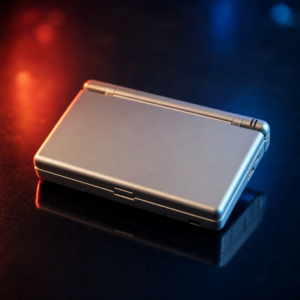
Guilty Gear Dust Strikers is a 2006 fighting game developed by Arc System Works and published in North America by Majesco Entertainment for the Nintendo DS. It marked the series’ debut on a Nintendo handheld, arriving during a period when several established fighting-game franchises were experimenting with the DS’s touch screen and dual-display hardware rather than porting their existing engines directly.
The most notable departure from the rest of the Guilty Gear line is its presentation and control scheme. Rather than the 2D sprite-based fighting the series is known for, Dust Strikers renders its cast as super-deformed, chibi-style 3D models and builds combat around the DS touch screen — matches lean closer to a rock-paper-scissors-style exchange of attack types than the frame-precise execution of the mainline console games. The change in approach made the game more accessible to newcomers on a handheld, though it was also the aspect most frequently singled out by longtime fans expecting a portable version of the series’ usual mechanics.
The roster draws from across the mainline series, including series mainstays such as Sol Badguy and Ky Kiske alongside characters with a smaller console footprint at the time, giving the handheld release a broader cast than a single mainline entry typically carried. The game also included the Robo-Ky Factory, a dedicated mode built around Robo-Ky, one of the series’ recurring mechanical characters.
Robo-Ky originated as a non-canon parody character in Guilty Gear X’s single-player mode — a mechanical stand-in built by the series’ own scientist characters — before becoming a playable joke character in some later home-console revisions, usually appearing as a hidden or bonus unlock rather than a roster regular. Dust Strikers built an entire secondary mode around the character rather than treating him as a minor unlockable, giving the handheld release a dedicated feature none of the mainline console entries have replicated.
Dust Strikers arrived during a period when several publishers were testing whether established console-fighting franchises could translate to Nintendo’s handheld touch-screen hardware, rather than simply scaling down an existing home-console build. The Nintendo DS’s dual-screen layout was commonly used to separate the on-screen action from a secondary input or status display, and Dust Strikers followed that pattern by keeping the fight on the top screen while using the touch screen to drive its attack-selection system — a control scheme distinct from the button-and-stick setup every other Guilty Gear release, before or since, has used. That handheld-first design is also why Dust Strikers has never been re-released or ported to a later platform in the way several mainline entries eventually were — its touch-driven combat is specific to the DS hardware it was built for.
Because its control scheme and presentation diverge so sharply from the rest of the series, Dust Strikers is typically discussed as a side entry rather than a benchmark for how Guilty Gear plays — a distinction covered in more depth on this site’s overview of every mainline and spin-off Guilty Gear release. Readers interested in how the series’ combat design evolved from the original Missing Link through to the current games can find that history on the origins of Guilty Gear page, and fans of the broader fighting-game genre may also want to see how Guilty Gear compares to other fighting games with a similar audience.
Dust Strikers sits alongside Guilty Gear Judgment as one of the series’ two handheld-focused spin-offs from the mid-2000s, both released as the mainline series was between numbered console entries. While it is not considered representative of the core Guilty Gear fighting-game experience, it remains a documented part of the franchise’s history and one of the few points where the series reached a Nintendo handheld audience directly.